

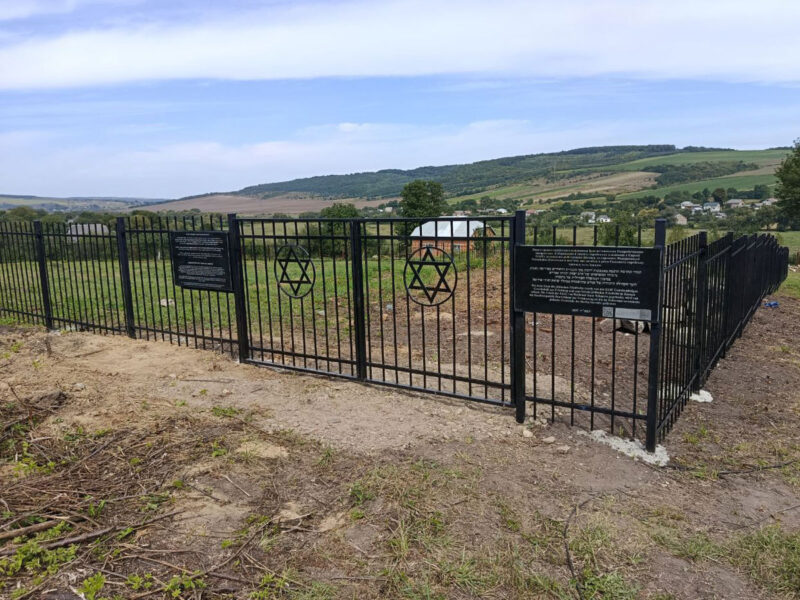
The ESJF installed a protective fence around the Zavaliv Jewish cemetery in Ukraine’s Ternopil region. This project was made possible with the support of the German Federal Foreign Office (Auswärtiges Amt).
During World War II, this Jewish cemetery was largely destroyed, and in the post-war period, the remaining tombstones disappeared from its grounds. During ESJF expeditions in 2019–2020, around ten fragments of Jewish tombstones were found on a nearby plot of land.
The history of the Zavaliv Jewish cemetery and the community behind it is complex and full of fascinating details, reflecting a time of coexistence between Jews and Ukrainians in the region – from Jews in leadership roles in the town to the rescue of people during the Holocaust.
Jews settled in Zavaliv in the 16th century. By the end of the 18th century, the rabbi of Zavaliv was Shmuel Zanvil, son of Mordechai Peshis, who was the father of Yehuda Zvi Brandwein, founder of the Stratin Hasidic dynasty.
In 1890, the Jewish population numbered 396 people, comprising 30% of the town’s total population. At the beginning of the 20th century, the town council was headed by Moshe Zonshtein, a Jew who contributed greatly to the town’s development. He was popular among both Jewish and Ukrainian residents and worked to ensure peaceful coexistence between the two communities.
During World War II, most Jewish residents of Zavaliv were deported to the Pidhaitsi ghetto and murdered there. Testimonies report that some Jews hid in small groups in the surrounding forests after the ghetto was liquidated. Several were sheltered and saved by Seventh-day Adventists living in Zavaliv.
Notably, the Biletsky family, who saved about 20 Jews from the town, were later honored with the title of Righteous Among the Nations.