

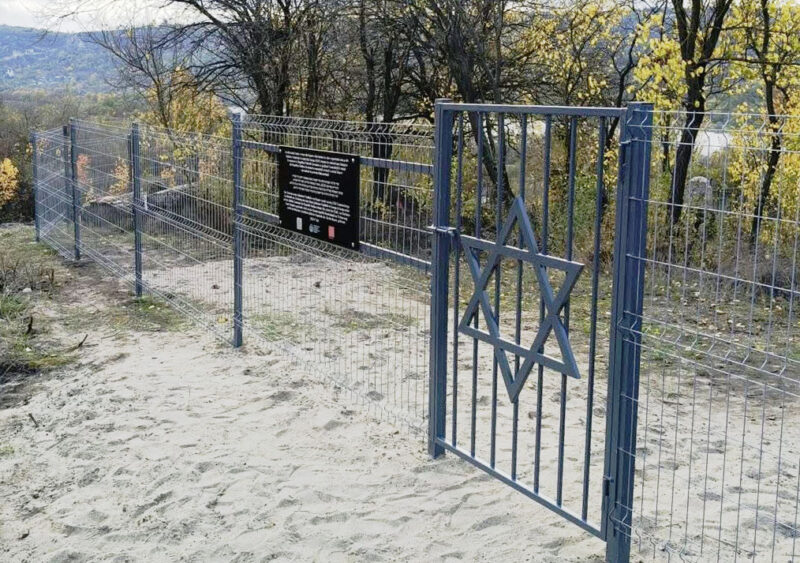
Rașcov is one of the earliest and most fascinating Jewish communities in Bessarabia, located on the eastern bank of the Dniester River. The town was an important center of early Hasidic tradition.
At one time, Yaakov Yosef of Polonne, a prominent disciple of the Baal Shem Tov and author of the first published Hasidic treatise Toldot Yaakov Yosef, served as the rabbi of the local community. In the early or mid-18th century, Shabtai of Rașcov, a kabbalist and member of the Besht’s circle, was also active here.
In 1887, the Jewish population of Rașcov numbered 1,410 people, about 57% of the town’s total population, meaning Jews made up the majority at that time.
The new Jewish cemetery in Rașcov was most likely established in the early 19th century and remained in use after World War II. The cemetery is surrounded on three sides by the remains of a stone wall. There are around 2,000 tombstones dating from the 1820s to 2004, and a beit tahara (funeral house) stands on the site.
Earlier this year, the ESJF also fenced the old Jewish cemetery in Rașcov, which preserves around 1,000 tombstones. The density of Jewish heritage in the area is underscored by the fact that just a few kilometers down the Dniester River lies Vadul Rașcov, a village with another historic Jewish cemetery containing approximately 2,500 tombstones.
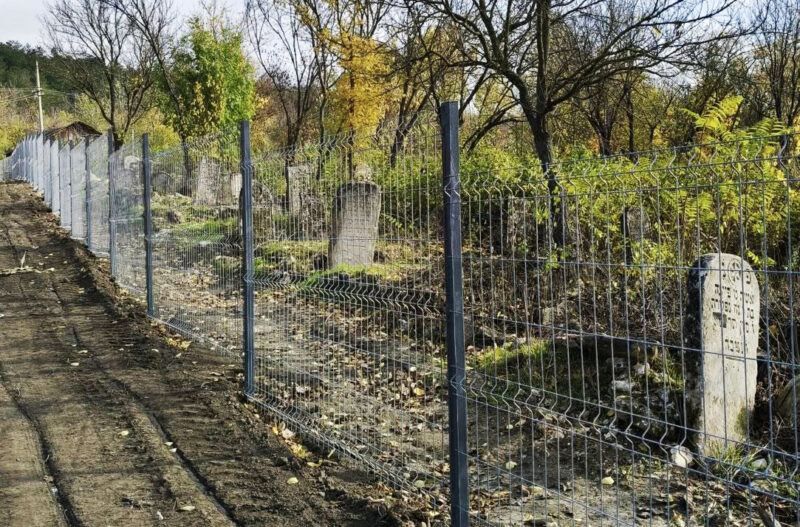
The fencing project at the new Rașcov Jewish cemetery was funded by the Auswärtiges Amt (German Federal Foreign Office).
The ESJF extends its sincere thanks to the Jewish Community of Moldova, our country coordinator Pavel Tuev, and the local authorities of Rașcov for their support and cooperation.