

Photo: Radovan Sremac
Between September and December 2025, ESJF European Jewish Cemeteries Initiative held the International Jewish Cemetery Research Competition, focused on Jewish cemeteries fenced between 2023 and 2025, with financial support from the German Federal Foreign Office.
As part of the competition, participants were asked to photograph all accessible tombstones in the Jewish cemetery and to take a group photo at the entrance, clearly showing the identification plaque with the site name. They were also required to collect and present as much information as possible about the cemetery using different sources. Projects could be submitted in any format, including videos, written studies, or news articles.
In total, ESJF received 35 applications from 9 countries. Although the competition was officially open only to cemeteries previously fenced by ESJF, many applications focused on other sites as well. Participants came from a wide range of backgrounds, including teachers, school and university students, librarians, researchers, and local residents living near Jewish cemeteries.
Below, we present the projects that won first, second, and third places.
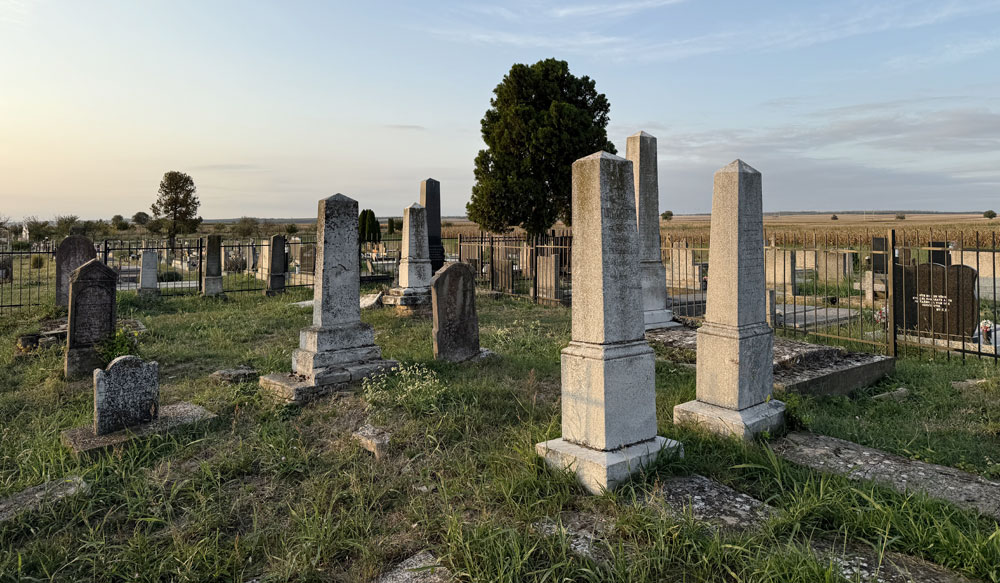
ESJF fenced the Šid Jewish cemetery in 2025.
As part of a competition, teacher Gordana Pavlović from “Sava Šumanović” Gymnasium, together with students Jovana Trifunović and Tara Obućina, conducted research on this site. They named their project “The Silence That Speaks.”
Through preparation, field research, and workshop activities, students learned to read the memorial space as a “text”: they identified symbols, analyzed Hebrew, German, and Serbian inscriptions, compared historical sources (R. Sremac), and by documenting the condition of monuments, developed research and digital skills.
As a lasting result, a documentary video, a digital catalog of symbols, and a photographic archive were created.
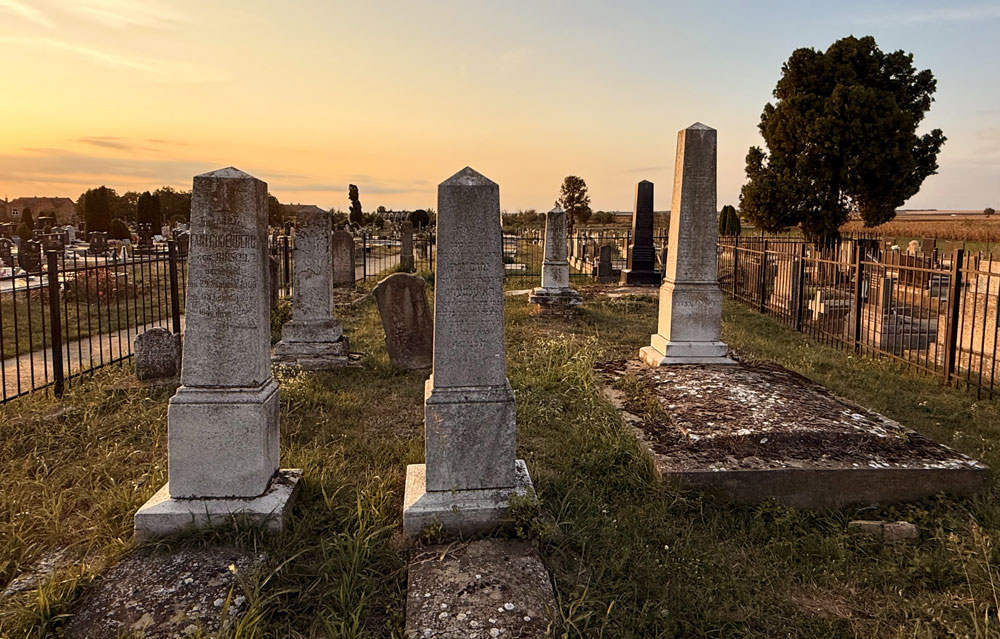
Photo: Radovan Sremac
As part of the International Jewish Cemetery Research Competition, the Šid Jewish cemetery was also studied by researcher Radovan Sremac, whose other works were referenced by the students conducting the previous research.
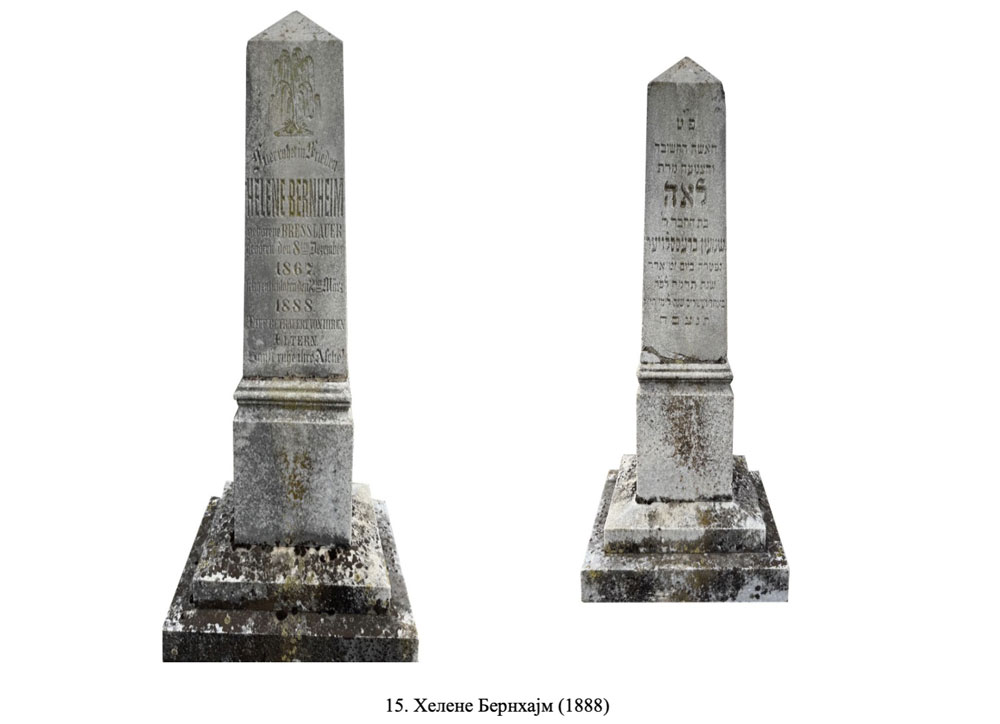
Photo: Radovan Sremac
Specifically, he photographed and cataloged all 33 graves with 29 tombstones preserved in the Šid Jewish cemetery. Radovan Sremac also worked with archival materials in his research on the Jewish community of Šid, using data about the people who once lived in the town.
The Legrad Jewish cemetery was fenced by ESJF in 2023.
While working on a project about it in 2025, Karla Varga researched the stories of the people buried there.
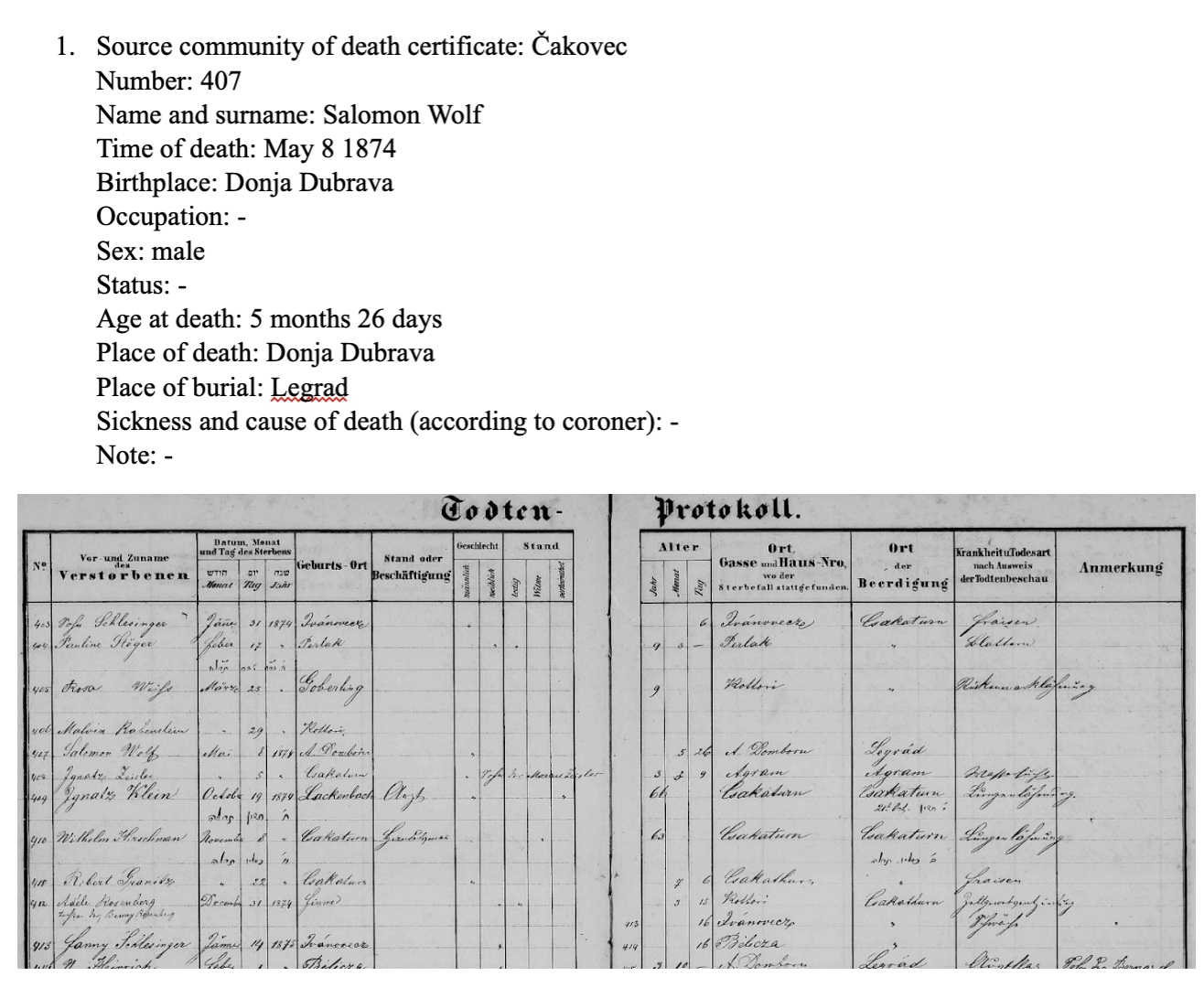
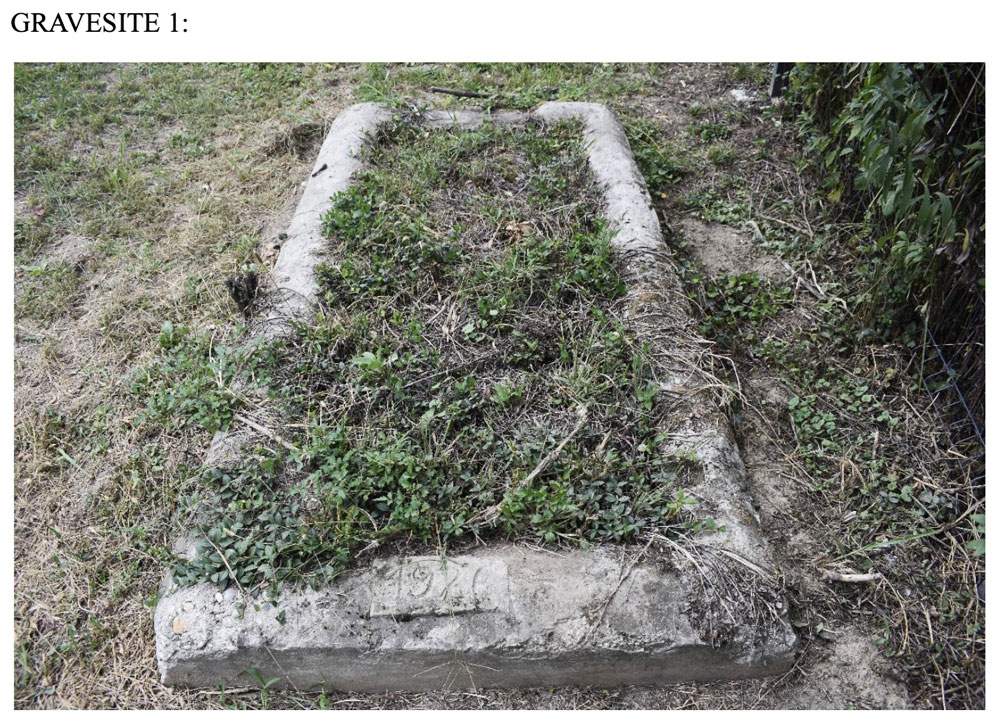
Photo: Karla Varga
Many of the gravestones that remain at the cemetery don’t have inscriptions, so unfortunately it’s hard to identify who is buried there.
However, Karla photographed all the surviving gravestone fragments and, using archival sources, found information about 19 people buried there, including details like: name and surname, time of death, birthplace, occupation, sex, status, age at death, place of death, sickness and cause of death.
The Derazhnia Jewish cemetery in Ukraine’s Khmelnytskyi region was fenced in 2023.
Tetiana Shevchuk, a methodologist at the House of Children and Youth Creativity of the Derazhnia City Council, worked on a project about the cemetery together with members of the Young Erudite Club: Sofiia Tokar, Yelyzaveta Kapeliushna, and Vladyslava Fochuk.
For the competition, the team created a video documentary and a detailed written report about the Jewish community of Derazhnia and its cemetery.
In 2023, the ESJF installed a protective fence around the old Jewish cemetery in Horodenka.
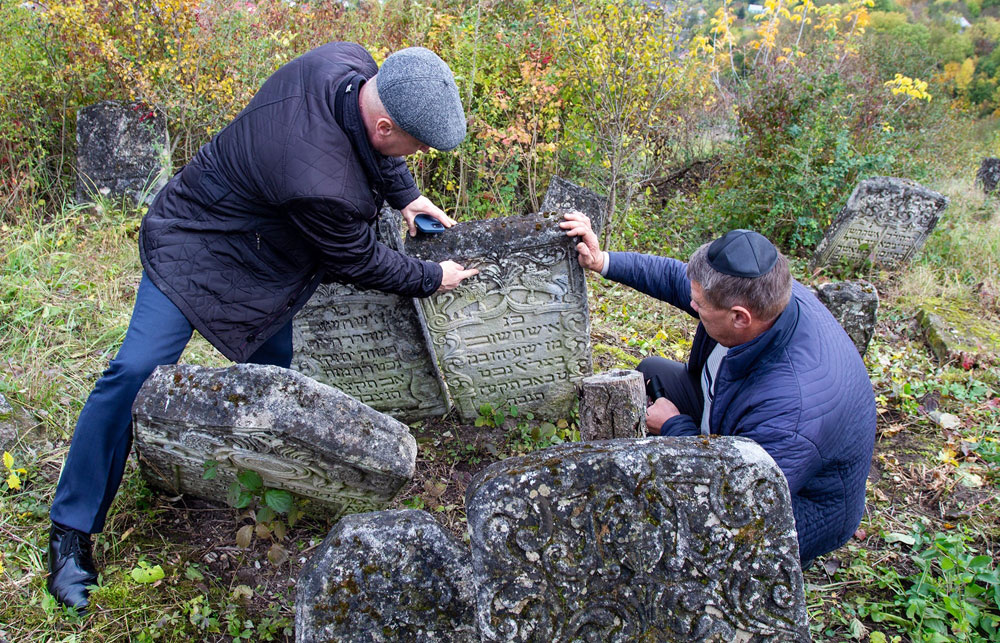
As part of the International Jewish Cemetery Research Competition, local historian Volodymyr Burdeniuk conducted an in-depth study of the cemetery and the town’s Jewish community within the broader historical context of Horodenka.
“I hope the results will be both interesting and will confirm archival data regarding the dating of the cemetery. In the future, it will be possible to install an information board with a map of the cemetery and a detailed description,” Burdeniuk said.
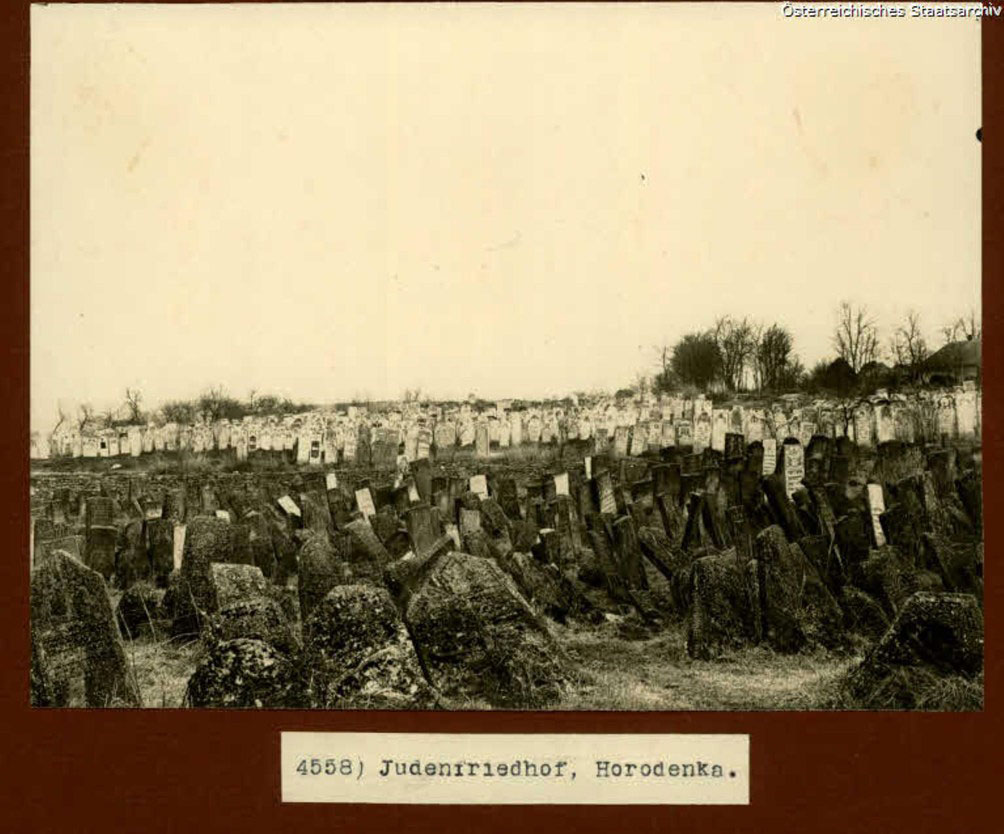
Material from a participant’s competition application
It is worth noting that in 2024 Volodymyr Burdeniuk participated in the ESJF national seminar on the preservation of Jewish cemeteries in Ivano-Frankivsk. The practical part of the seminar took place in Horodenka itself. During the on-site workshop, participants were shown how to interpret symbols and read dates on Jewish tombstones.
ESJF fenced the Kolbasov Jewish cemetery in 2024.
As part of the competition, Adriana Amir documented the cemetery, where only 10 tombstones have survived. She identified several male and female names, while the rest of the stones have been damaged over time due to weathering.
The researcher published her study of the cemetery in the local print newspaper Sninské noviny.
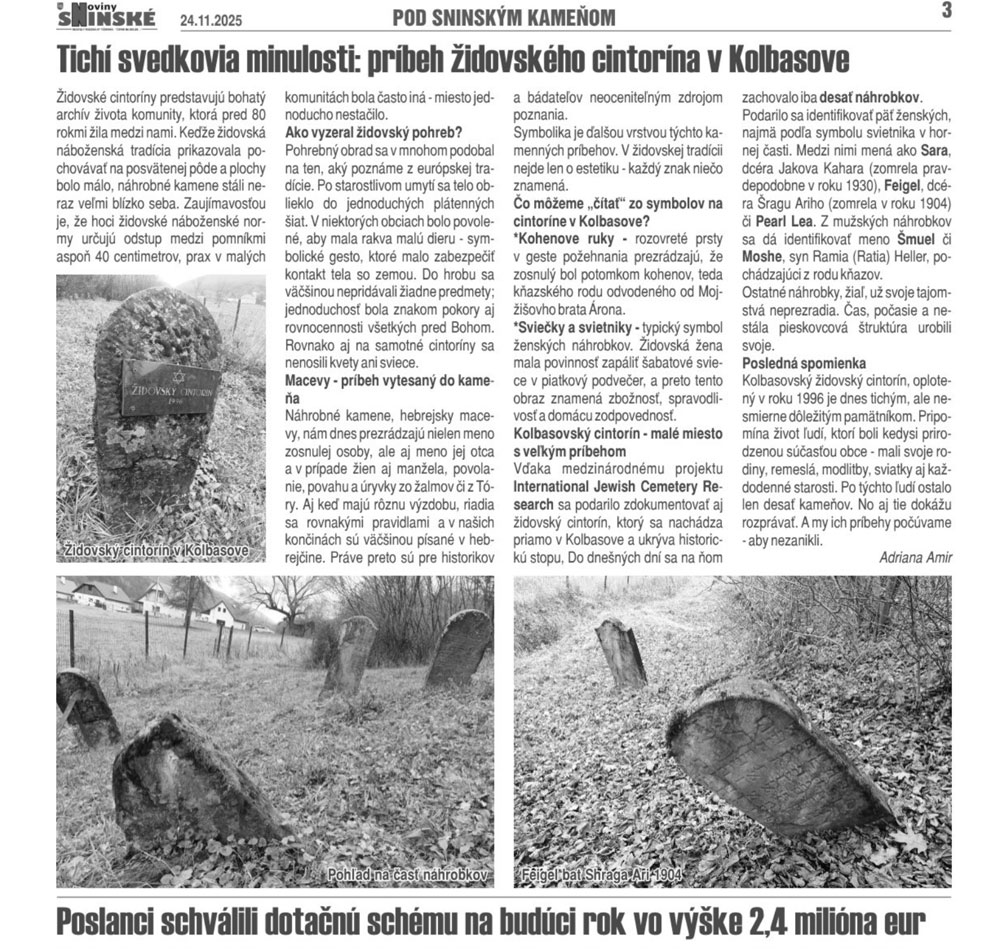
Material from a participant’s competition application
The Jewish cemetery in Ardud was fenced by ESJF in 2024.
Bogdan Ionescu and Petru-Rareș Vodă carried out a research project on this burial site. In addition to studying the history of the town’s Jewish community and its cemetery, they translated several Hebrew epitaphs. The translations were first produced using ChatGPT and then verified by a native Hebrew speaker.
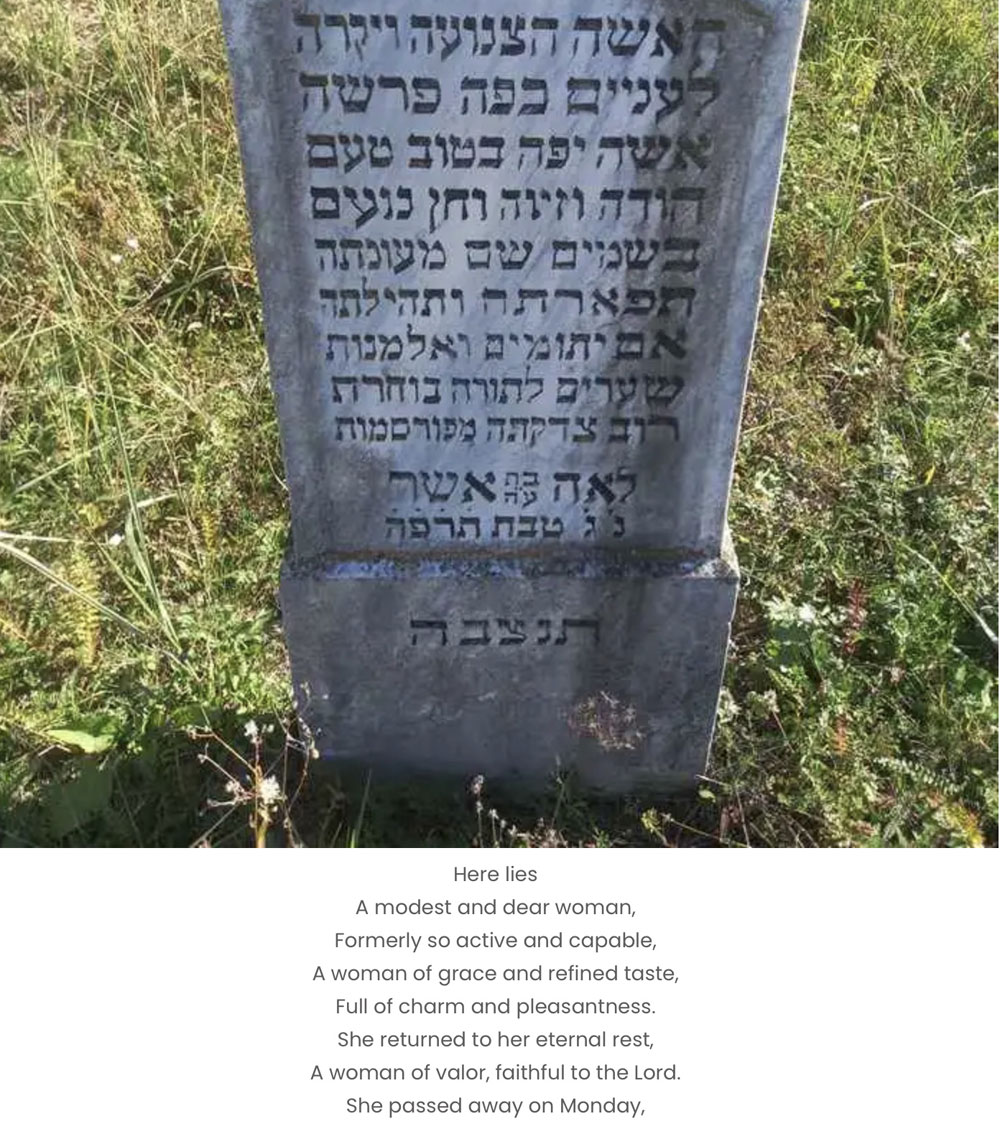
Photo: Bogdan Ionescu, Petru-Rareș Vodă
“Nevertheless, we must exercise a certain degree of caution with these translations, as we are dealing with complex Hebrew epigraphy in which certain letters and abbreviations may be interpreted in various ways if one is not familiar with the poetic and biblical conventions of funerary language,” the researchers noted.
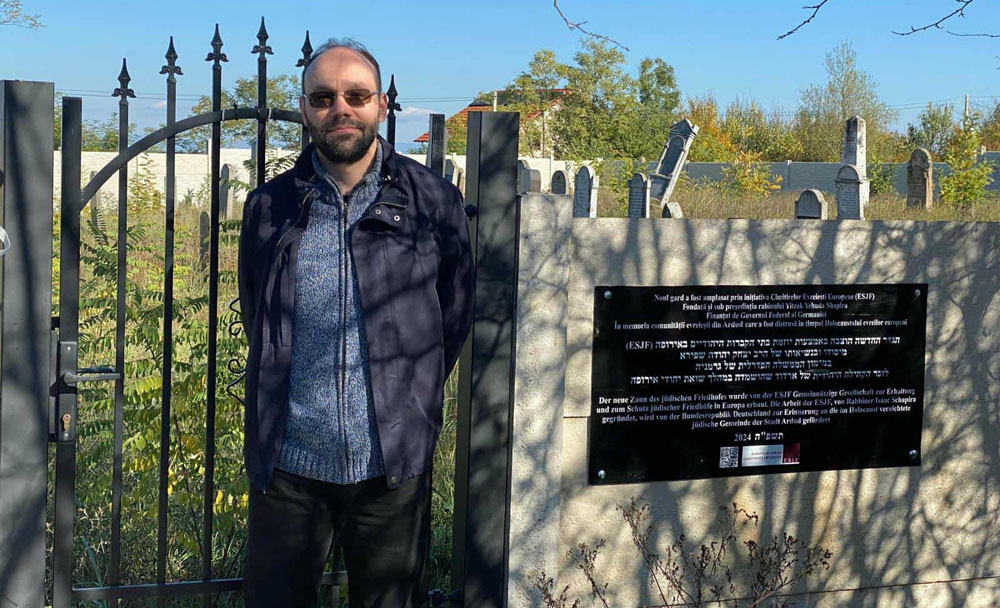
Photo: Bogdan Ionescu, Petru-Rareș Vodă
Bogdan Ionescu and Petru-Rareș Vodă also published their research on blog.revistacultura
The Jewish cemetery in Ceadîr-Lunga was fenced by ESJF in August 2024.
Alexandra Kuyujuklu from Ceadîr-Lunga conducted a research project on the history of the Jewish cemetery in her hometown.
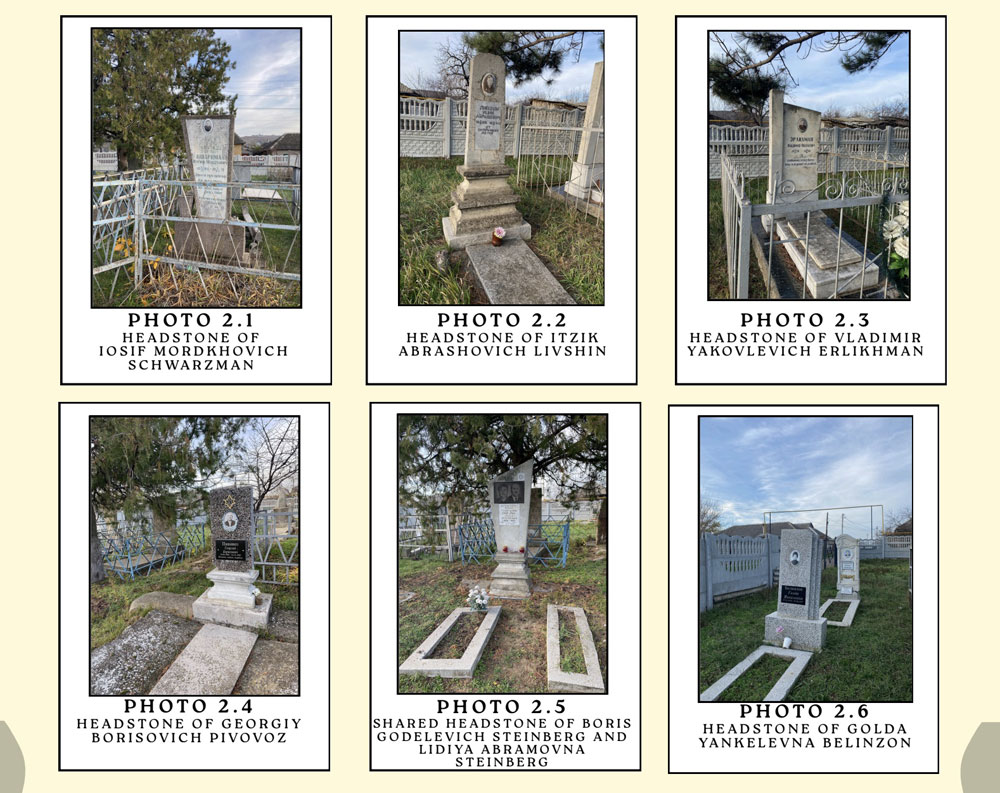
Photos: Alexandra Kuyujuklu
During her visit to the cemetery, she documented the site through photography, created panoramic images, and recorded the informational sign and gravestones with preserved epitaphs. The researcher assessed the current condition of the cemetery and drew connections between those buried there and expanded biographical profiles of Jews who once lived in Ceadîr-Lunga. She also used materials from the Ceadîr-Lunga Museum, local newspaper archives, and online resources.
“The purpose of my research is to explore the history of the Jewish community of Ceadîr-Lunga, preserve the memory of its members, and provide a description of the cultural heritage represented at the Jewish cemetery,” the researcher writes in her project.
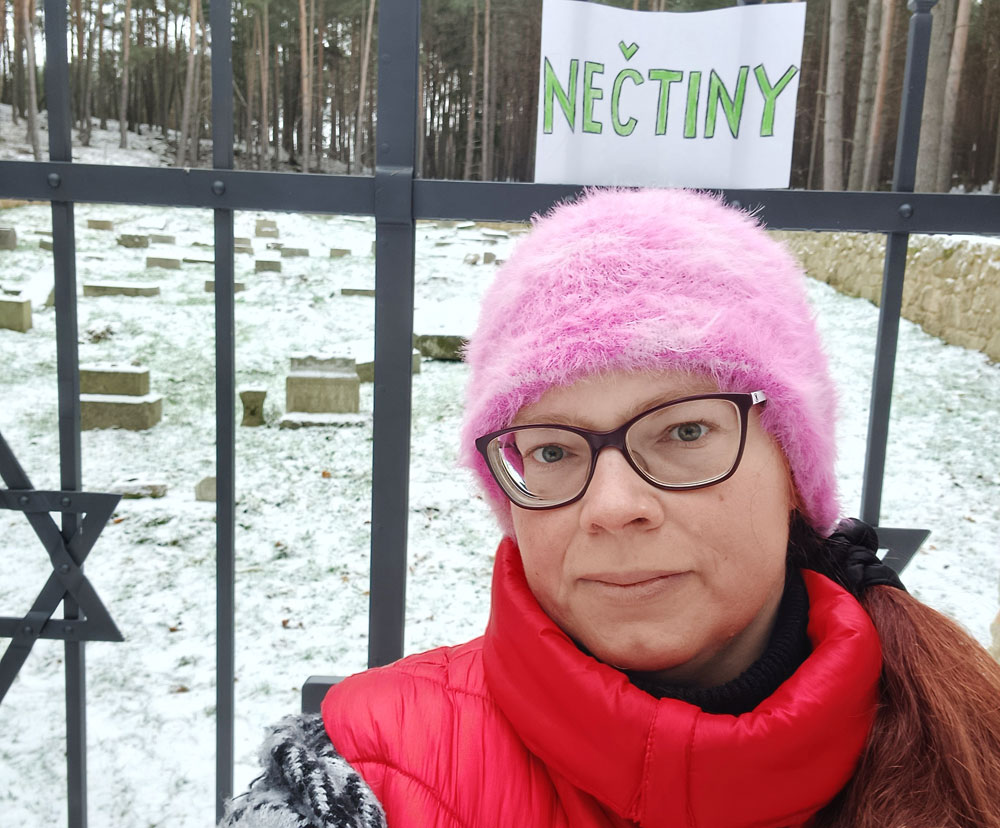
ESJF fenced the Jewish cemetery in Nečtiny in 2024, restoring its original stone wall.
Petra Holá documented most of the approximately 100 tombstones, including broken stones and tombstone fragments.
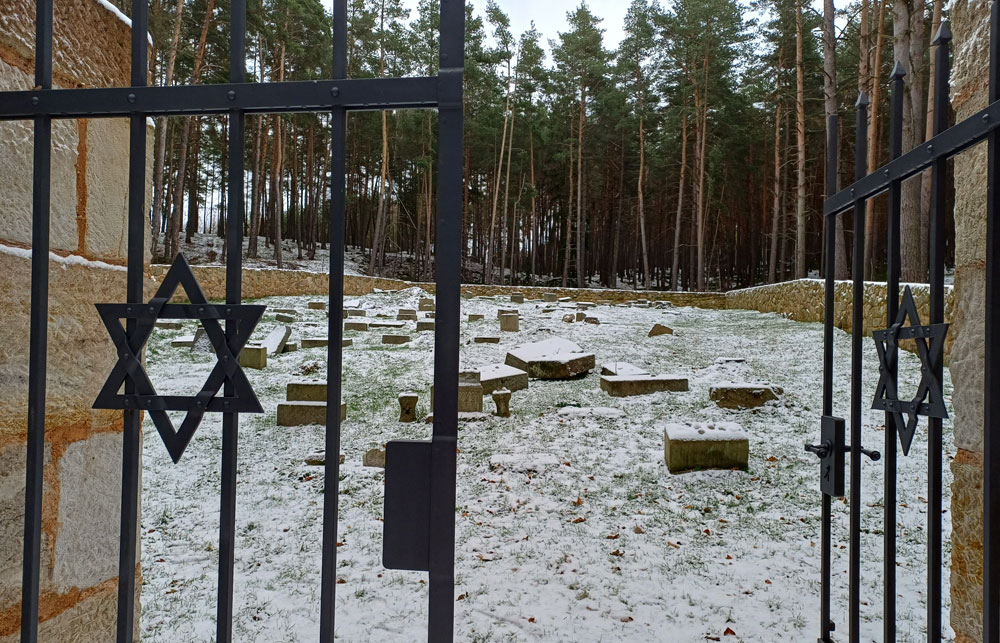
Photo: Petra Holá
The researcher notes that, in addition to the fence, the cemetery now has a new entrance gate; however, the restoration is not yet complete. Some of the preserved tombstones, dating from 1747 to 1927, have been re-erected, while many others still lie on the ground. In many cases, only fragments of tombstones or their bases have survived.
ESJF has fenced Horodok Jewish cemetery in 2025.
Dmytro Poliukhovych, Oleh Fedorov, Ihor Oliinyk, and Valentyn Nyshchyi conducted a large-scale study, analyzing the majority of tombstones at the cemetery. The main conclusions drawn by the researchers are as follows: plant-based ornamentation dominates the decoration of matzevot throughout the entire period of the necropolis’s existence (from the early 18th century to the 1990s), while zoomorphic imagery is less common and shows limited variety. Eighteenth-century stonemasons from Horodok demonstrate a clear reverence for Western European heraldic traditions. In particular, griffins are depicted not in a folk Jewish style, but in accordance with Western heraldic conventions. A rare practice of “crowning” lions is also observed. On matzevot from the late 18th to the early 19th century in Horodok, lions are frequently shown wearing crowns, an exceptional feature for the region.
ESJF sincerely thanks all participants in the competition. Each research project is highly valuable and makes a meaningful contribution to preserving historical heritage and raising awareness among local communities. The impact of your work is enormous.
A special thank you goes to the project coordinator, Eugene Shnaider.
The International Jewish Cemetery Research Competition, as well as the fencing of all cemeteries included in the project, was made possible thanks to the financial support of the German Federal Foreign Office.