

Markulești (also known as Starovka, after the name of the landlord, or Kot-Markulești, from the Hebrew phrase ki tov — “this is good,” according to local legend) was founded in 1837 (according to another version, in 1839) as one of the first Jewish agricultural colonies in the Bessarabia region, established on leased land. According to the 1897 census, the town had 1,339 residents, 1,336 of whom — 99.8% of the population — were Jews.
World War II brought an end to this Jewish community. Bessarabia was retaken by Romanian and German forces in July 1941. More than 1,000 Jews were murdered on the outskirts of the town. Later, between September and November 1941, a transit camp for Jews deported to Transnistria operated in Markulești.
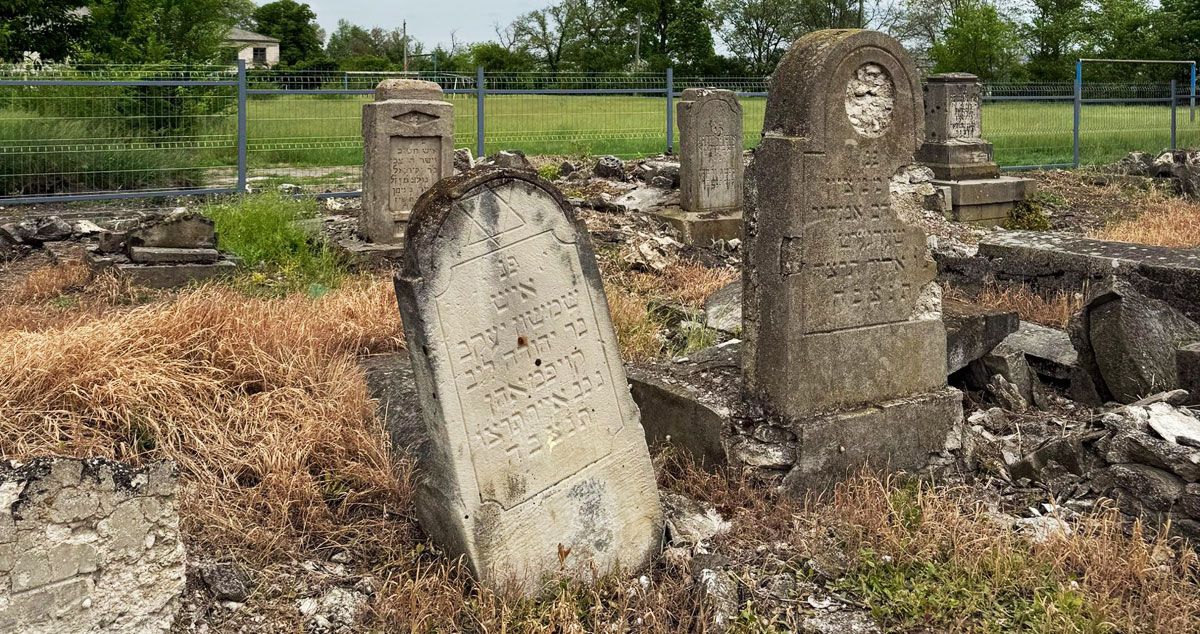
The Jewish cemetery in Markulești likely dates back to the earliest years of the colony. The oldest identified gravestone (no longer in its original location) appears to bear the date 1767, around 70 years before the colony itself was founded, which raises questions about its origin. If the date is correct, the stone may have been brought from another cemetery, possibly in Bălți. Today, the cemetery contains more than 200 preserved gravestones, most dating from the late 19th and early 20th centuries, with the latest burials dating to 1969.
ESJF has now completed the fencing of the Jewish cemetery in Markulești. The project was funded by the German Federal Foreign Office and implemented with the support of our partners, the Jewish Community of Moldova, and our country coordinator, Pavel Tuev.